Introduction to Discrete Element Modeling
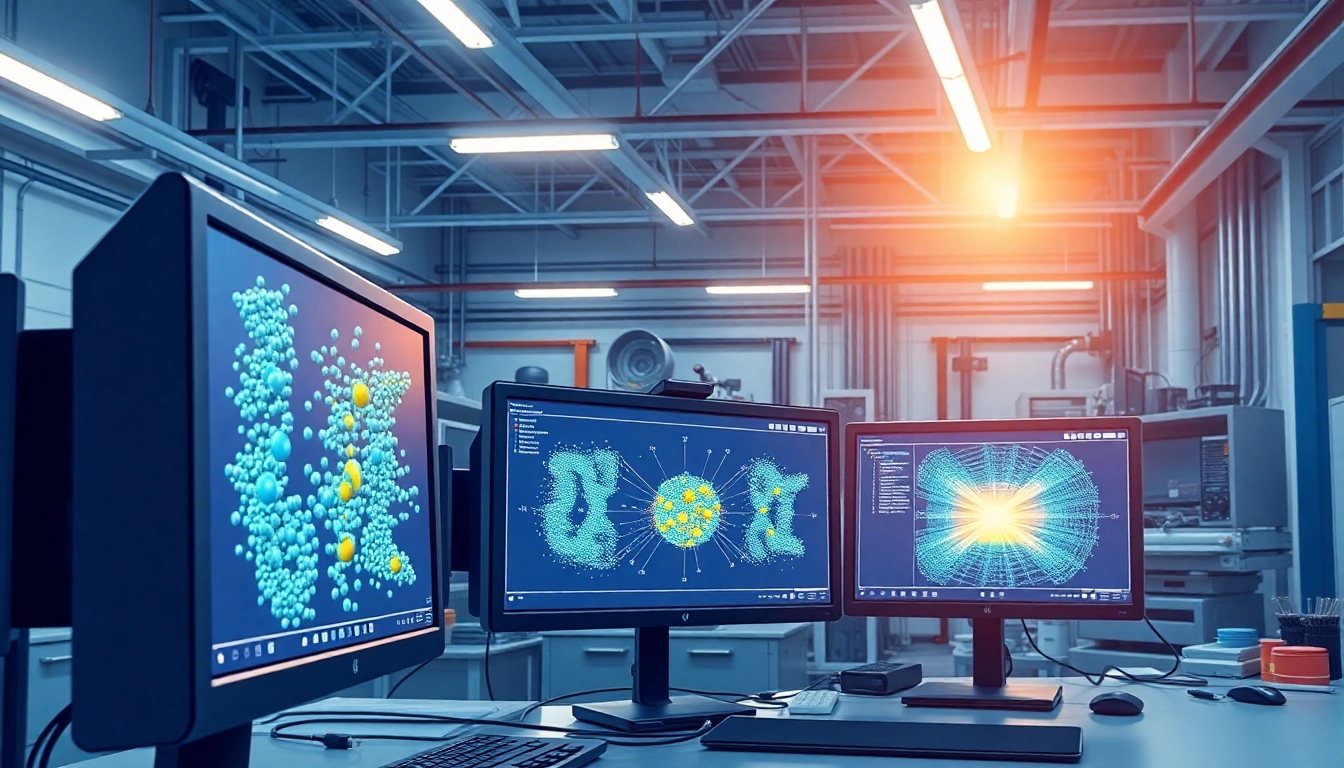
Discrete Element Modeling (DEM) is a powerful computational technique used to simulate and analyze the behavior of systems composed of discrete particles or elements. This simulation method allows for a detailed understanding of the interactions and dynamics of particles, an essential aspect in various fields such as engineering, materials science, and geophysics. By modeling each particle as an individual entity, DEM provides insights into how these particles interact under different forces and conditions. As you delve deeper into this topic, you'll discover the breadth of applications and implications of Discrete Element Modeling in modern engineering.
What is Discrete Element Modeling?
At its core, Discrete Element Modeling is a numerical method used to study the mechanical behavior of granular materials through the simulation of discrete interactions between particles. Unlike continuum mechanics, which treats materials as a continuous medium, DEM breaks down materials into many discrete elements that can respond to forces independently. This allows for detailed examinations of how these particles move, collide, and interact in various environments. The applications of DEM can be found in fields ranging from civil engineering and mining to pharmaceuticals and agriculture, where granular behavior is crucial.
History and Development of DEM
The origins of Discrete Element Modeling can be traced back to the 1970s when researchers sought to model granular flow and behavior. Early implementations were primarily theoretical; however, the advent of more powerful computing resources in the late 20th century enabled practical applications of DEM in an array of industries. The development of various algorithms and software packages further propelled the use of DEM, making it a go-to solution for understanding complex particle interactions. Over the years, DEM has evolved significantly, incorporating advanced mathematical techniques and computational strategies to enhance accuracy and efficiency.
Importance in Modern Engineering
Today, Discrete Element Modeling plays a pivotal role in modern engineering practices. Its ability to simulate real-world scenarios involving bulk materials helps in optimizing processes, improving design methodologies, and enhancing safety measures. As industries demand more efficient systems, DEM offers insights that traditional methods cannot provide, allowing engineers to anticipate issues before they arise. Whether it's managing the flow of materials in a manufacturing system or assessing the stability of a soil structure, DEM's impact is profound and far-reaching.
Core Principles of Discrete Element Modeling
Fundamental Concepts of Particle Interactions
The foundation of Discrete Element Modeling lies in understanding the fundamentals of particle interactions. This includes collision detection, contact force calculations, and the formulation of equations of motion for each particle. Interactions can involve repulsive forces, friction, rolling resistance, and more, depending on the nature of the particles and the environmental conditions. These interactions are modeled using various theories of contact mechanics, ensuring the simulation reflects realistic behavior under specified conditions.
Mathematical Framework of DEM
The mathematical models used in Discrete Element Modeling are crucial for accurately predicting the behavior of particle systems. DEM employs a numerical integration approach to calculate the motion of particles based on the forces acting upon them. The governing equations typically include Newton’s laws of motion, where forces are derived from the interactions between particles. Moreover, a time-stepping method is commonly utilized to update the positions and velocities of particles at each step, facilitating precise tracking of the system's dynamics.
Common Algorithms Used in DEM
Several algorithms are essential for implementing Discrete Element Modeling effectively. These include the soft-sphere model, which allows for deformation during collisions, and the hard-sphere model, which treats particles as rigid bodies. Other advanced algorithms incorporate aspects such as bonding between particles or multi-body dynamics. The choice of algorithm often depends on the specific application and desired accuracy, as well as computational efficiency. Understanding these algorithms is vital for selecting the appropriate model for a given problem.
Applications of Discrete Element Modeling
Industrial Applications of DEM
In industrial settings, Discrete Element Modeling serves various purposes, from optimizing processes in bulk material handling to assessing equipment performance. Industries such as mining, agriculture, and food processing leverage DEM to simulate the behavior of granular materials, improving operations such as transport, mixing, and storage. For instance, DEM can identify bottlenecks in material flow systems and propose solutions to enhance throughput and efficiency.
Research and Development Uses
Research institutions utilize Discrete Element Modeling to explore and validate theories related to granular physics and material science. Through DEM, researchers can reproduce experimental conditions in a virtual environment, providing insights that help shape future material designs and applications. Whether examining the performance of new composite materials or studying the mechanics of landslides, DEM is an essential tool in the R&D toolkit.
Case Studies Highlighting Success
Numerous case studies have showcased the successful application of Discrete Element Modeling. For instance, in the construction industry, DEM has been used to analyze the stability of soil retention structures, leading to more resilient design strategies. In pharmaceuticals, DEM assists in understanding how powders behave during blending processes, resulting in improved product formulation and quality. These examples illustrate the versatility and effectiveness of DEM across various sectors.
Challenges in Implementing Discrete Element Modeling
Limitations of Current DEM Software
Despite its strengths, current DEM software can encounter limitations such as computational inefficiency for large particle systems or challenges in accurately modeling complex interactions. The choice of parameters and the level of detail specified can significantly impact the simulation outcomes, and often there is a trade-off between accuracy and computational speed. Addressing these limitations requires ongoing advancements in software capabilities and improved algorithms.
Data Requirements and Setup Complexity
Implementing Discrete Element Modeling often demands substantial data for proper setup, including particle size, shape, mechanical properties, and interaction coefficients. Collecting and validating this data can be time-consuming and complex, influencing the reliability of the simulations. Engineers and researchers must collaborate closely to ensure accurate data representation, particularly when transitioning from theoretical models to practical applications.
Common Errors and Troubleshooting Tips
Users of Discrete Element Modeling software may encounter common errors related to numerical instability, inappropriate boundary conditions, or inaccurate material properties. To mitigate these issues, thorough validation of parameters is essential, alongside robust sensitivity analyses to understand the effects of varying input data. Regularly updating software and consulting user communities can also help troubleshoot and refine DEM practices.
Future Trends in Discrete Element Modeling
Advancements in DEM Technology
The future of Discrete Element Modeling looks promising with the continuous development of computational technology and algorithms. Advances in machine learning and artificial intelligence are being integrated into DEM, allowing for smarter simulations that can automatically adjust parameters based on prior results. As computational power increases, the ability to model larger and more complex systems becomes feasible, leading to greater accuracy in predictions.
Integrating DEM with Other Simulation Methods
Future trends indicate a growing integration of Discrete Element Modeling with other simulation techniques, such as Computational Fluid Dynamics (CFD) and Finite Element Analysis (FEA). This hybrid approach enables comprehensive modeling of systems where both particle dynamics and fluid interactions or structural deformations are significant, providing a more holistic view of complex physical phenomena. Such integrative methodologies will facilitate advanced research and development, pushing the boundaries of what's achievable.
Predictions for the Future of DEM
As industries strive for efficiency and sustainability, the demand for precise simulations using Discrete Element Modeling will only grow. The integration of real-time data and advanced predictive algorithms promises to enhance decision-making processes in manufacturing, logistics, and construction. DEM is expected to evolve into an indispensable tool for engineers and researchers worldwide, shaping the future of material sciences and engineering.
FAQs about Discrete Element Modeling
1. What types of materials can be simulated using DEM?
Discrete Element Modeling can simulate a wide variety of materials, including granular solids, powders, and even complex mixtures. It is particularly effective for analyzing systems where particle interactions are critical.
2. How does DEM differ from Finite Element Analysis (FEA)?
DEM models materials as discrete particles that interact with one another, while FEA analyzes materials as continuous entities, focusing on stress and strain distributions rather than individual particle behavior.
3. Is DEM software difficult to use for beginners?
While DEM software can be complex, many manufacturers provide documentation, tutorials, and community support to help beginners navigate the learning curve effectively.
4. Can DEM be used for real-time simulations?
Advancements in computational power and algorithms are increasingly allowing for real-time simulations, enabling engineers to make quicker decisions based on dynamic systems.
5. What industries benefit the most from DEM?
Industries such as mining, construction, pharmaceuticals, and food processing greatly benefit from DEM through improved material handling, processing efficiency, and product design strategies.